Sunday, May 24, 2009

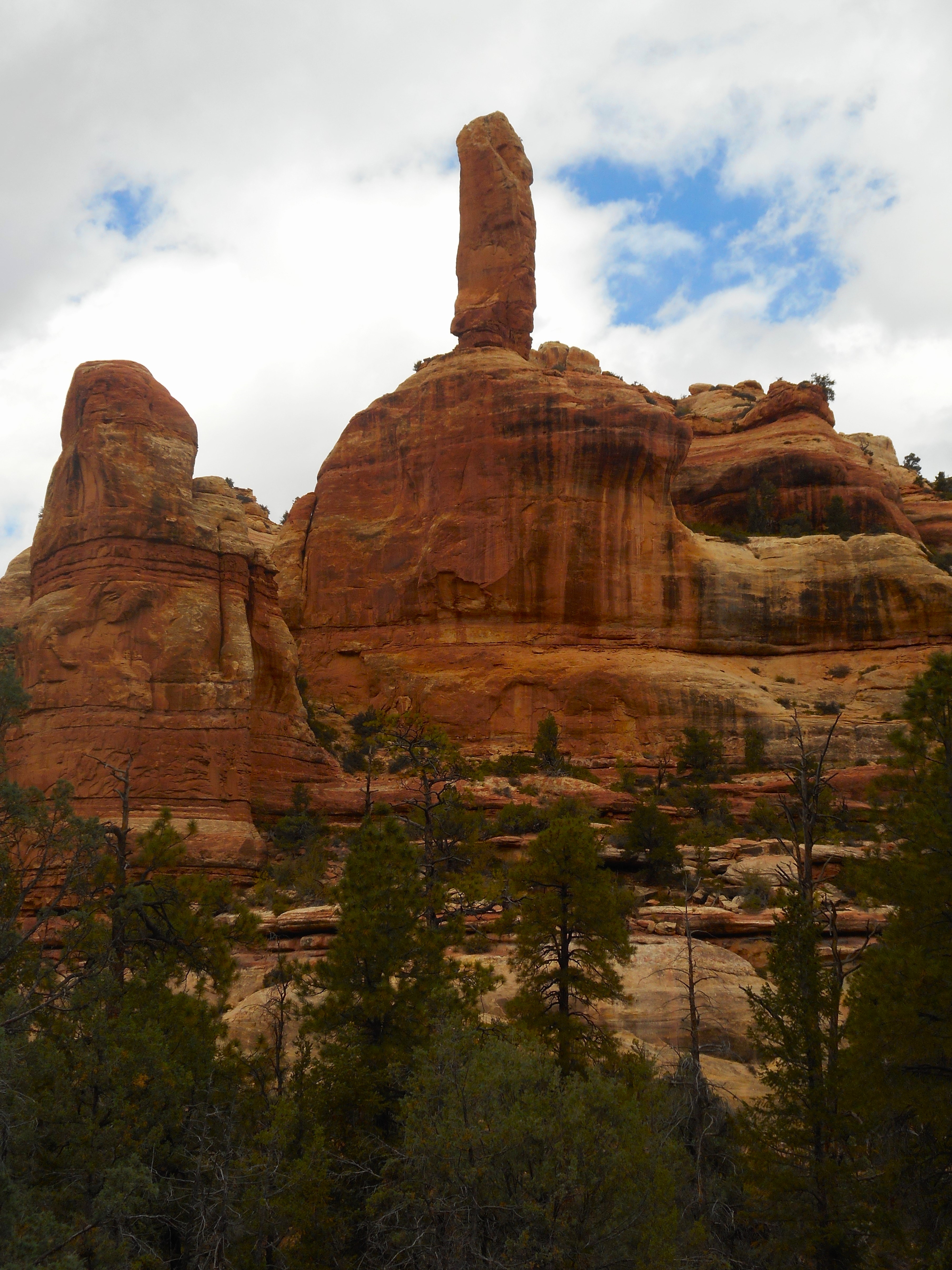
The Citadel Ruins

The Citadel Ruins up close

Below the Citadel Ruins


Grain storage structures located along the way to the Citadel Ruins


The Citadel from the other side of deep chasm


Land Bridge Leading out to the Citadel Ruins

The Citadel Ruins are one of the BLM's many "top secret"ruins that they have asked not to appear on any maps or in any guide books in order to minimize impact. The best way to find them is to just go to Google Maps and type in "Citadel Ruin." Someone has marked them there.

Basically, you will travel down the 261 (along which many ruins are found) until you come to Cigarette Springs Road. After travelling down Cigarette Springs road for a while you will come across a BLM sign asking you for $2. There are many unmarked ruins found on hikes in this area. To get to the Citadel you will keep going down the road a ways until you eventually come to a small pull-off just in front of a dry river bed at a dip in the road. Map it all out before you go. I had to use a GPS to find the right starting point.


Once you find the dry river bed, its easy. Just follow it along and it will lead you right to the land bridge leading out to the Citadel. At the beginning of the land bridge, there are some grains storage structures that are not too hard to find. You will need to scramble a little to find a good route down to the land bridge and once across, up to the actual Citadel Ruins. These are some very well preserved ruins located high on a cliff jutting out into Road Canyon. I couldn't decide if they had built homes here for defensive purposes, as a look-out over the canyons below, or just because it would be a fun place to live. This is a very enjoyable hike (if you can find it) and made me want to make a return trip to the Road Canyon area in the future to explore the area more.
Natural Bridges

Owachomo Bridge

Kachina Bridge


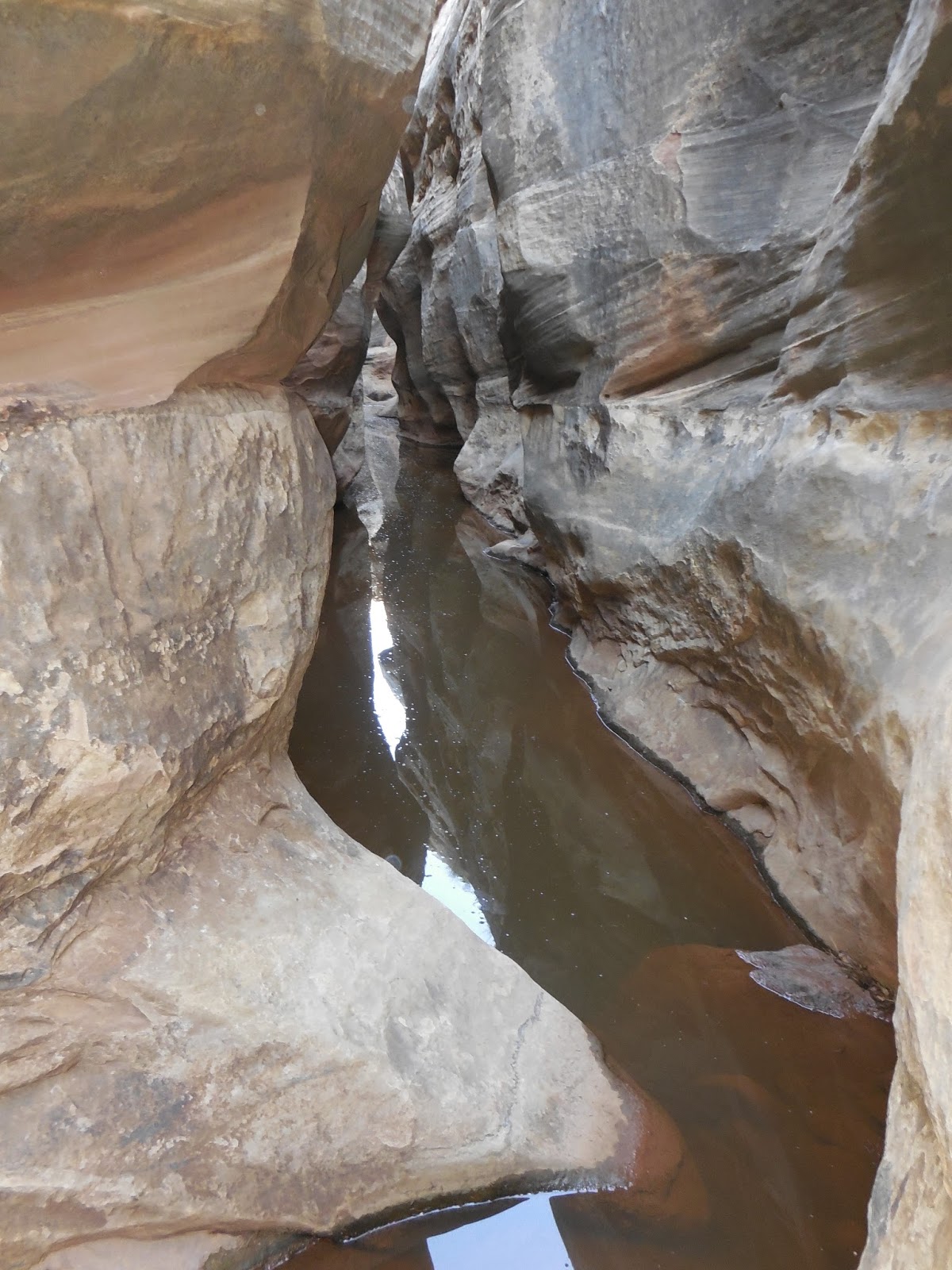
Stream along the path between Sipapu and Kachina


Sipapu Bridge


The natural bridges loop hike is pleasant eight mile hike which will take you from Sipapu Bridge to Kachina Bridge to Owachomo Bridge and back to your vehicle (or vice versa if you began at Owachomo). If you would like, you can spot a vehicle or drop a bike off at the last the bridge you will visit to save yourself the two-mile walk back to your vehicle.

I began my hike at Sipapu Bridge. The National Park Service has ladders, stairs and handrails to help you make the descent down to Sipapu Bridge from the parking area. I was there while it was raining and was very grateful for the handrails located on the steep parts of the slick rock descent. Sipapu Bridge is very beautiful as is the three mile walk from Sipapu to Kachina. This trail follows along a stream which you will have to cross many times as it meanders back and forth against the canyon walls. You could probably keep your shoes dry if you really tried hard, but I would be a lot easier to just plan on getting your feet wet. If its warm, you'll want to get your feet wet anyway. The stretch from Sipapu to Kachina is the most pleasant stretch of the hike and is very shady, so it would make an enjoyable hike even in the summer.

Once you get to Kachina, you will leave the stream. There is not sign telling you this, but you will need to turn left just after passing underneath Kachina Bridge if you wish to exit there or continue further up to Owachomo Bridge. If you do keep following the stream past Kachina Bridge, after a quarter-mile you will come across a "wrong way do not enter" sign going across the stream. So after turning left at Kachina, you will come to the trail which will climb for a bit before leading towards Owachomo Bridge. The three-mile hike from Kachina to Owachomo is not as nice as the hike from Sipapu to Kachina. The canyon widens up and there is no running water until just before you arrive at Owachomo. Owachomo and the area beneath it is pretty, but if you are trying to budget time and energy, you many want to hike Sipapu to Kachina, and then drive to Owachomo.

This is very beautiful area. I saw several people at each of the trailheads to the three natural bridges, but on my six mile walk along the canyon bottoms from Sipapu to Owachomo I did not see anybody. The loop hike is a great way to experience the beauty of Natural Bridges National Monument while at the same time feeling some seclusion.


South Fork of Mule Canyon

A "miniature museum" pieced together by past visitors to a cave dwelling

A water slide leading from the cliffs back down to the canyon floor


Ruins I was unable to access


An old grain storage structure


Tall conifer trees along the canyon floor

The south fork of Mule Canyon is a pleasant hike which follows a stream up a redrock canyon filled with ancient ruins and artifacts. The canyon becomes more beautiful the further up you go, and the runis appear to increase in frequency, making it very difficult to turn around.

I had originally planned to walk up the canyon for an hour and half before turning around, but it took three hours before I could finally convince myself to turn back. In those three hours of walking, I think I only made it three or four miles up the canyon. I left the trail several times to inspect ruins located up on the sides of the canyon walls. The BLM has intentionally left the ruins in this canyon unmarked to reduce impact, so you will need to keep your eyes peeled to the canyon walls lest you miss something. I found five ruin sites on my way up, and didn't see any of them on my way down once I had stopped looking for them.

The beginning of the trail is not well-marked (done intentionally to reduce travel in the canyon). The dirt road you will turn off on is not marked and is located a half-mile east of the "Mule Canyon Ruins" signed pull-off along state highway 95. This can be confusing. But just go a half-mile east of that pull-off, and there will be an unmarked dirt road coming north off the 95. Just after you turn onto this dirt road you will see a BLM sign asking you to pay $2 to hike Mule Canyon. Then just drive another .3 miles to the bottom of a hill where you will park along the side of the road and head west into the South Fork of Mule Canyon.